
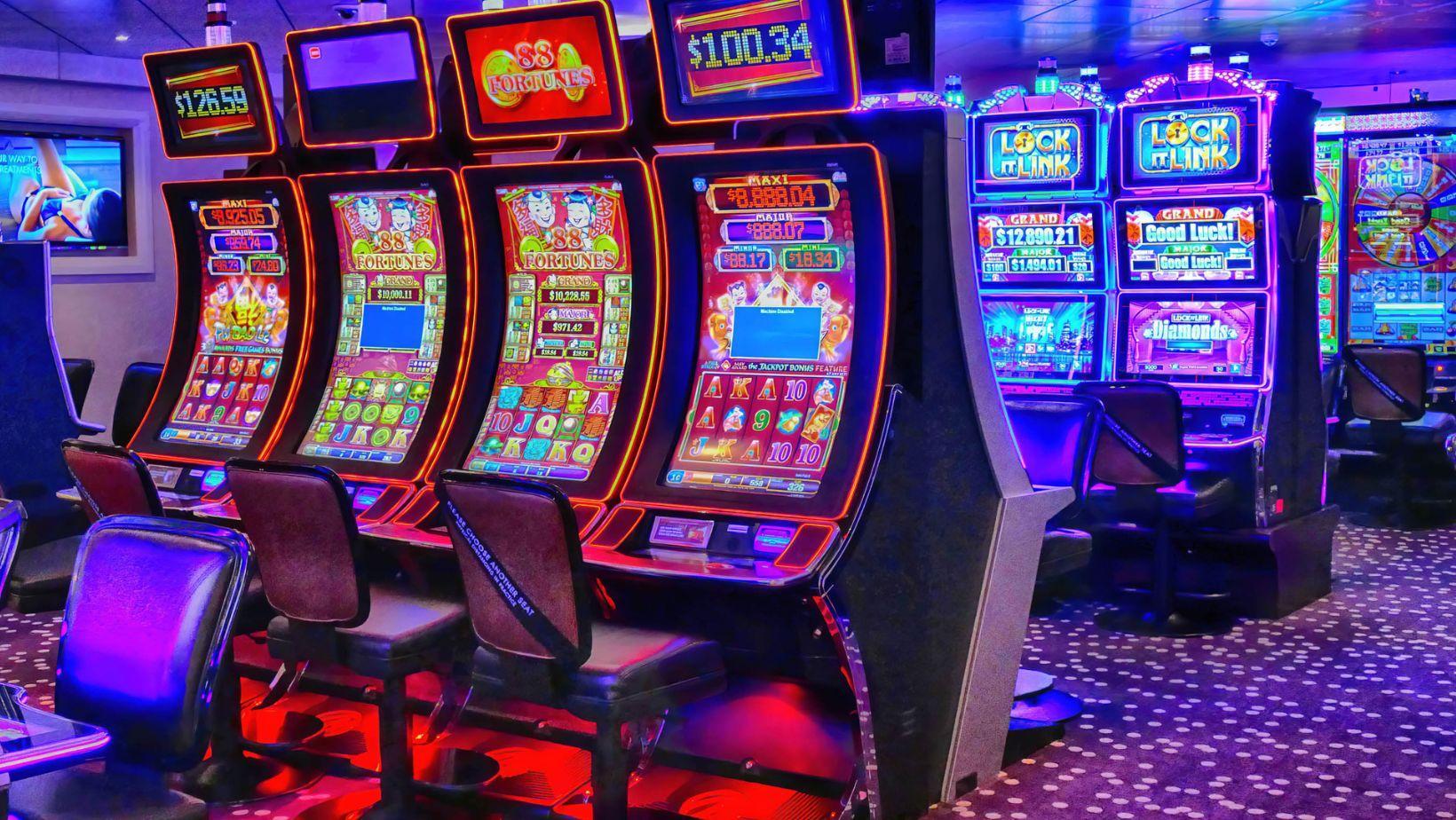

Rick's Café Américain doesn't have a single spin of a reel in it. No dice, no cards on camera for more than a few seconds. And yet when people picture Casablanca they picture a casino. Roulette wheels turning under low light, a piano in the corner, men in white dinner jackets losing money they can't afford to lose. That's the trick. The gambling floor in classic film was never really about gambling. It was shorthand for danger dressed up as glamour.
Eighty-four years later the trick still works. Walk into any film class discussion of Ocean's Elevenand someone will bring up the Bellagio fountains before they bring up the actual heist plot. The casino set piece became its own visual language, one that horror has its haunted house and westerns have their dusty main street. It has rules. It has recurring beats. And it has quietly evolved into something that now sits in your pocket.
That's the part worth sitting with. The fantasy that Michael Curtiz built with a soundstage and some fake chips in 1942 didn't stay on the screen. It migrated. A recent Washington City Paper roundup on mobile casino apps reads almost like a continuation of the same scene, minus the tuxedos and the moral ambiguity. Same tension. Same lighting cues, honestly, if you've seen how these apps design their lobby screens. Just a smaller stage.
The silent era set the table before sound did
Gambling dens showed up in film almost as soon as film existed as a storytelling medium. The Museum of the Moving Image's history of the silent era notes how quickly filmmakers reached for morally loaded urban settings, saloons, dens, backroom card games, because they gave directors a visual excuse for shadow, smoke, and crowding actors into a frame with something at stake. No dialogue needed. You saw a man's hand shake over a stack of chips and you understood everything about him in two seconds.
That efficiency is why the trope survived the jump to sound, then to color, then to digital. It's cheap narrative fuel. Put a character at a table and the audience instantly knows the stakes are financial, moral, or both.
Casablanca gave the genre its blueprint
Rick Blaine's café works because the gambling room is background, not foreground. The real game is political. Vichy officials, refugees, letters of transit. But Curtiz stages half the film's tension inside a casino because a casino is a room where everyone is performing control while secretly terrified. That's the genre's founding idea, dressed up once for wartime Casablanca and recycled forever after.
Compare that to how Vegas itself was being built at almost the exact same moment. HISTORY's photo essay on Las Vegas's transformation traces the city's shift from a dusty rail stop into a manufactured glamour capital, and the timeline overlaps almost perfectly with Hollywood's growing appetite for casino settings. Film didn't just borrow the aesthetic. It helped build the myth Vegas then had to live up to.
By the time Sinatra and the Rat Pack shot the original Ocean's Elevenin 1960, actually filming inside real Vegas casinos overnight after their live shows, the genre had a second blueprint: the heist. Not the tortured gambler anymore, but the cool operator who beats the house on purpose. Two archetypes, one set.
The 90s and 2000s split the genre in two
Mike Hodges' Croupier(1998) went back to the tortured-gambler version, but stripped of romance. Clive Owen's character watches the floor with total detachment, narrating his own descent like he's editing someone else's bad novel. It's a small, cold film, and it's arguably the most honest one on this list about what dealing actually looks like: repetitive, exhausting, morally numbing.
Steven Soderbergh's 2001 Ocean's Elevenremake went the other direction entirely. Glossy. Confident. The Bellagio's fountains become almost a character. George Clooney's crew doesn't lose to the house, they outsmart it, and the film's pleasure comes from watching competence rather than watching desperation. Two films, same genre, opposite emotional registers. That split still defines almost every casino movie made since. You're either watching someone unravel or watching someone win too easily.
I'd argue Croupieraged better. The heist fantasy is fun once. The slow bleed of Croupiers dealer watching other people's addictions up close, that's the version that actually tells you something true about a casino floor.
What the genre actually sold audiences
Think about what these films have in common beyond the felt tables. Controlled lighting. A closed social world with its own hierarchy. Strangers forced into proximity by money. Directors reach for casinos the same way they reach for weddings or courtrooms: a preset stage where tension is baked into the architecture before a single line of dialogue gets written.
Las Vegas Weekly's recent cultural primer on the city makes a similar point about how thoroughly film shaped outsiders' expectations of the place. Most people who've never set foot in a casino still picture one exactly the way Casino(1995) or Rain Man(1988) framed it. That's not journalism. That's set design doing the work of persuasion.
The fantasy didn’t die. It got smaller and closer
Here's where it gets interesting. Nobody needs a soundstage anymore to access that same fantasy of risk and control. Mobile casino apps have effectively become the genre's newest set piece, minus the crew and the script. The lobby screen lights up the same way a film's establishing shot of a casino floor does: bright, layered, promising something is about to happen.
I've deposited into three different mobile casino apps this year testing withdrawal speeds for other work, and the design language borrows more from cinema than people realize. Slot animations use the same visual crescendo a film editor builds toward a big reveal. Win screens pull the same tricks Scorsese used in Casinos opening sequence, quick cuts, warm gold tones, a sense of momentum. It's not accidental. Game designers study the same audience psychology directors do.
The gap is that a movie ends. An app doesn't. That's worth remembering before anyone chases the on-screen version of the feeling with actual money.
A genre that keeps finding new rooms to live in
What's genuinely surprising is how little the core formula has changed since Curtiz shot Rick's Café on a Warner Bros. Lot. Tension, proximity, money, a closed room. Directors have swapped out the tuxedos for hoodies (see Molly's Game 2017) and swapped Monte Carlo for online poker rings, but the bones are identical. A 2026 film could set its casino scene inside a phone screen and it would still work, because the genre was never really about the furniture. It was about watching someone risk something in a room built to make risk look beautiful.
That's probably why it hasn't faded the way some genres have. Westerns went quiet for decades before Yellowstonerevived interest. The casino scene never really left. It just kept finding smaller screens to live on.
FAQ
What was the first major film to use a casino as a central setting? Early gambling dens appeared in silent films well before sound, but Casablanca(1942) is usually cited as the film that cemented the casino as a genre-defining backdrop, blending glamour with political and moral tension in one room.
Why do directors use casinos as a setting so often? A casino gives filmmakers a closed social space with built-in stakes, visible hierarchy, and constant proximity between strangers. It's efficient storytelling: the setting itself signals risk before a character says a word.
Is Ocean's Eleven based on a real heist? No. Both the 1960 original and the 2001 remake are fictional, though the 2001 version was partly filmed inside working Las Vegas casinos, including the Bellagio, which gave it an unusually authentic visual texture for a heist film.
How did casino movies influence real gambling culture? Films like Casinoand Ocean's Elevenhelped shape public expectations of Las Vegas glamour long before many viewers ever visited a casino, effectively doing marketing work for the city and the industry without being ads.
Are mobile casino apps trying to recreate that movie aesthetic? Some clearly borrow cinematic techniques, dramatic lighting, crescendo animations, warm color palettes, to build anticipation the same way film editors do. The psychology behind the design isn't new, it's just been repackaged for a phone screen.
The casino scene earned its place as a genre the hard way, through decades of directors returning to the same room because it never stopped working on an audience. Whether that room is Rick's Café, the Bellagio floor, or a lit-up lobby screen on someone's phone, the emotional trick is identical: make risk look like romance. Worth remembering that in the real version, the house still has the edge it always had. Gambling involves risk. Please play responsibly and only wager what you can afford to lose. If you feel gambling is becoming a problem, visit BeGambleAware.org or call 1-800-GAMBLER.